Showing posts with label monsters. Show all posts

May 25, 2009

REVIEW - Monster Manual 2


So, I've had about a week or so to look over the new Monster Manual 2. Let me first get it out of the way that 1) I absolutely love this book; and 2) see point #1. I have only minor complaints (see below), but anyone running a homebrew 4th Edition D&D campaign should pick this book up right away. There's even value over just having the stats via D&D Insider, which I'll also get into below.

This is not just fanboy craze either; the MM2 beats out the MM1 hands down. The content is better, there's tons of "old school classics" that have been updated to 4E, and there's even a fair number of monsters that have very detailed entries Something that I didn't like about the MM1 was that nearly everything was given only one or two paragraphs of background and development. The MM2 is a much better book, here's why...

4E is the New Old School
I've said it before, and I know it wrangles a few nerves out there -- but it really is true. And now, with the Monster Manual 2, so many classic old-school OD&D and 1E D&D monsters make their return to the latest edition of the game.  The Behir has been one of my favorite dragon-like monsters since I first ran The Lost Caverns of Tsojcanth in 1982, and the gran'old age of 10. That's what... a 27 year old "favorite monster"? The new 4E version sports both a paragon and epic tier version of the beast, as well as "Behir Bolter Whelps" that look much like the little baby in Alien. I love it!

More favorites from past editions make thier reapperance in the MM2 as well, including Ankhegs, Bullywugs, Giant Ants (low level favorites), Myconids (!),  Spriggans, Cockatrice, Centipedes, Black Pudding, Xorn and many many more from old times.

And how could I not mention that.. I SAVED THE RUST MONSTER!!! Ok, maybe I didn't, but I'm stoked to see it back in print. Although it abilities are not as terrifying as I would have them, I suppose it goes back to the save or die argument that 4E is trying to avoid. Altogether, I'm very happy with all these old faces being updated to the new rules.

MM2 In Print Beats DDI
One question that I've been asking myself lately is: why should I buy any of the printed books if ALL the stats and crunch for everything is including in my DDI subscription already? I mean, I already make up my own "Tactics" for each encounter -- I don't need the MM telling me how to play these creeps. Also, I could easily make up my own backstory and "Lore" sections for all the creatures as well, which happens fairly often anyway when you customize your campaigns. In addition, I could easily just come up with my own encounter groups and... see where I'm going? Having the printed book in hand is a time saver. You trade time for a possible loss of your own creativity. The MM has all this information already worked out; something you can't get from DDI.

That being said, one of my complaints about the MM1 was that there was not enough detail. It was almost too sparse, and I rarely open it up. Maybe it's becuase I just "know" the creatures therein, but I think it is more due to the fact there there is just too little information over what DDI already offers. The Monster Manual 2 changes that. That authors have done an excellent job of providing lots of detail for each creature to help players integrate them into their campaigns in a "sensible" way. Althought the section on Dragons does have a few pages of literally just statblocks with token artwork (zero other text), the rest of the MM2 is pretty juicy.

Take for example, the Eldritch Giant entry. There's a preamble paragraph (2 sentences) but then you'll find this:

"Eldritch Giants come from a different time - an earlier age when the primordials made the world. Although fashioned from fire, stone, and storm, the primordials' wondrous creation was heavily invested with magic, and the eldritch giants aided their primordial lords in the world's formation. Although their powers have ebbed since those days, eldritch giants remember their ancient mastery of magic and forever seek to regain it." -- Monster Manual 2.
The entry then goes on to detail two eldritch giants and their tactics. After that there's another background/lore section that includes another two or three paragraphs of detail. All in all, entries as detailed as this abound, and in general my feeling is that more thought went into developing these monsters than did the MM1.

Complaints
I suppose if I were to complain about something it would be that many of these "classic" monsters should have been included in the Monster Manual 1. I know I know... they have a BIZNES to run, and obviously there's a certain marketing strategy here to get people to buy two books instead of one. Meh... I would have bought the MM2 anyway.

My other complaints are similar to those I had for MM1 - no Ecology/Terrain information. No tables for random monster generation. No tables for random treasure types (sigh...). Everything in 4E is so friggen balanced, that even treasure is relegated to the DMG -- even for monsters like the Gold Dragon (which is pictured sitting on top of a classic horde of gold... but in reality, if you looked it up in the DMG... it would be much less than that). Oh well, random tables and charts seem to be a thing of the past for the 4E D&D designers (a mistake IMHO), so there's nothing of the sort in the MM1 or the MM2.


Conclusion
I don't have much negative to say about the Monster Manual 2. The detail is great, the artwork is (of course) superior. The number of monsters is outstanding (over 125). There's a big expansion of demons, devils, archons, and angels. There's a fair number of new goblins, gnolls, lizerdmen, giants (frost!), and trolls (among other humanoid like types). For $20 its a great value - definately pick it up.

March 1, 2009

RPG Blog Carnival - Monster & Maps

When I started working on Open Game Table I asked for people to choose what categories of posts they would want in the anthology. New maps and monsters came out as one of the top categories, but the problem was that these were one of the least blogged about topics. We had virtually no submissions on these topics, save for a very few excellent posts. So, when it came to be my turn again to host the RPG Blog Carnival for February I naturally chose Maps & Monsters to be the topic. I'm very pleased to report that we had some excellent contributions as a result.
  1. The Art of the Near TPK not only features a regular new monster or other crunchy bit for your 4E game... but Jennifer Weigel (one of the artists contributing to Open Game Table) usually adds in her own illustrations of these Weekly What the Heck creatures. Last month we saw:
    1. The Demodracosauralisk (L15 Elite Artillery)
    2. Triclops Manipulator (L20 Soldier) and the Ultimate Dungeon Master (L35 Solo Brute) LOL!
    3. Shellsong Siren (L10 Lurker) and the Archaic Gastropod (L2 Soldier)
  2. Project Valient also contributed -- but sadly their site has vanished (anyone know what happened?).
  3. Newbie DM delivers again, this time with his first post to be included in the RPG Blog Carnival -- Rufus Drunkbeard and a map of his tavern for 4E D&D.
  4. Vulcan Stev comes out swinging with three new NPCs and creatures for Pirates of the Spanish Main RPG. If you like Pirates of Caribbean and want the stats of a whole host of characters and creatures from those flicks for your PotSM RPG game -- drop by his site and check out all his hard work. Anytime someone includes a Monkey, a Kraken, and a dead guy in the same post -- he's on my A-list
  5. Compromise and Conceit's author wants you to use your camera as a automatic map-maker in "Map-making the easy way…" He also posts "Infernal Constructs: The Myrmidon" along with some amazing artwork -- click through to see it.
  6. Bob over at The Dice Bag jumps into the carnival with some excellent musings on "The Value of a Good Map". So -- do you loath mapping for RPGs too?
  7. RPG Brouhaha reviews the online "E-Adventures Mapping Tool". Individual experiences may vary -- but Harnish's review is worth a look if you are looking for something useful for quick, easy mapping.
  8. Chgowiz from Chgowiz's Old Guy RPG Blog throws his name into the carnival hat with a PDF download of his WinterWar campaign adventures - "The Kobold Caves of Terror".
  9. Fame & Fortune also adds some maps to the mix with "Undead Maps for the Carnival".
  10. Mad Brew Labs also shows up to the carnival, post in hand, with "Map Tutorial from the Cartographers’ Guild". Mad Brew links to an amazing tutorial that -- if anything -- should top your reading list to check out in depth.
  11. Spirits of Eden shows up as well with 4E D&D stats for Utsuho, the final boss of Subterranean Animism and Kuannei, a world-ending "Scourge" monster. RUN FOR YOUR LIVES!!!
  12. And finally, Mike Bourke of Campaign Mastery contributes to the carnival with a MASSIVE 3 - part series (!) with "The Flói Af Loft & The Ryk Bolti"; which is quite possibly the weirdest blog post title I've ever seen too. Go get a cup of coffee... and enjoy this lengthy read; it will be well worth your time.
That is it! Excellent work by everyone involved... my only wish is that I had more time to participate in my own way other than hosting it. Hopefully, once Open Game Table is published... I'll have more time to just get back to blogging. =D


    December 12, 2008

    Mother Nature as Inspiration

    Mother nature proves again and again to be the best source for new creations and monsters for my games. A few months ago I posted about Trilobites, and then followed up with a 4E type stat block for the buggers. Well today, I'm presenting The Bot Fly Larvae. My vision for these creatures in Dungeons & Dragons would be they would be parasites of large-sized or larger creatures; and offer up a second wave of enemies once you've defeated their hosts. Alternatively, the presence of these bugs in the bodies of the defeated could be some sort of organic treasure or a resource for specific Rituals.

    So today, I give you the real-world version of The Bot Fly Larvae.


    Read the whole article from Popsci.com if you really want to make yourself sick.


    What's more interesting is that a related species of parasitic fly-larvae are considered a delicacy by some cultures.
    "In cold climates supporting reindeer or caribou-reliant populations, large quantities of Oedomagena tarandi ("warble fly") maggots are available to human populations during the butchery of animals. These are relished in modern times by Eskimos as important seasonal luxuries containing high levels of protein, fats and salt. Copious art dating back to the Pleistocene in Europe confirms their importance in premodern times as well" -- Wikipedia.
    Now we have inspiration for not only a new monster, but possible a new class of items for use in game. For example: the larvae extracted from the flesh of dead mythical creatures are rumored to possess magical qualities to anyone who eats them.

    For me, mother nature always seems to be a reoccuring source of inspiration. Where do you get your inspiration for new content in your games?

    November 6, 2008

    [4E] The Incubus - An Old Demon Made New Again

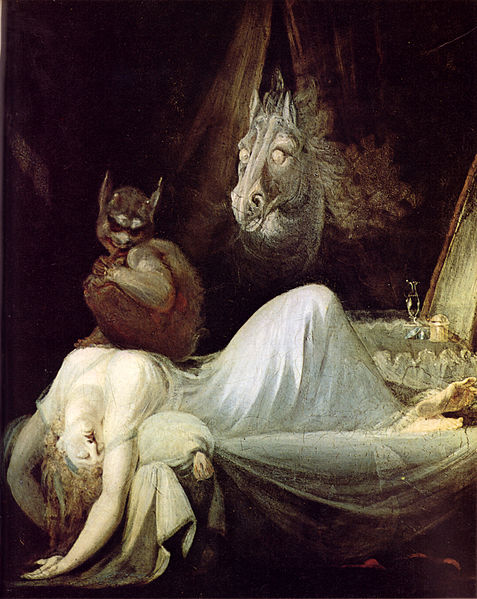
    Last summer I wrote a three part series, "The Dead Queens of Morvena", about a curse that befell two sister-queens who had been betrayed by their king. The source of the curse was an ambiguous evil presence that had been driven out from The Fetheriun, but over time sought to return to its spawning ground. It was called Incabus, and is shown in the image at left [1].

    Much to my surprise, a creature with (nearly) the same name was featured in Dragon #54 (October, 1981), it was titled "Incubus" by Craig Stenseth [2]. The Incubus was also featured later as a male version of the Sucubus in the index of the AD&D Monster Manual II, a creature that (not surprisingly) seemed to make many appearances in the AD&D Ravenloft Campaign Setting[3]. It should also be noted that the 3E Forgotten Realms Campaign Setting featured a cool half-demon race, the "Fey'ri", that was are the decendents of Incubus or Sucubus demons that mated with elves[4].

    The original creation of the Incubus was excellent (simply a male version of Sucubus is a bit weak, in my opinion), so I thought I might adapt Stenseth's version to my concept of Morvena and update the stats for 4th Edition Dungeons & Dragons. I present those to you below. Enjoy!

    The Incubus
    "Incubi in natural form appear very much like largish human males with these differences: Small horns project from the sides of the forehead; they have a large pair of bat-like wings extending from their back, and their hands are typically clawed; they usually dress in fairly expensive-looking clothes, and don’t usually use weapons."
    -- "Incubus" by Craig Stenseth, Dragon #54 (1981)

    Small elemental humanoid (demon)
    L12 Solo Soldier / XP 3500
    Initiative +10
    Senses Perception +10; darkvision
    HP 615; Bloodied 307
    AC 30; Fortitude 27, Reflex 26, Will 24
    Saving Throws +2
    Resist 10/variable (2/encounter; see 4E Monster Manual glossary), insubstantial (see below)
    Speed 6, fly 8

    Action Points 2

    Slam (standard; at-will): +19 vs. AC; 2d6 + 5 damage, the target looses one healing surge and the incubus can teleport up to 4 squares.

    Rending Claws (standard; encounter): +19 vs. AC; 4d8+5, the target is weakened (save ends) and looses one healing surge. The incubus may also teleport up to 4 squares.

    Forked Tongue (minor; recharge 4-6) • Psychic: Female humanoid targets only, Range 10, +17 vs. Will; 1d8+5 and the target is dazed until the end of their next turn and looses one healing surge.

    Teleport (standard; encounter) • Arcane: The incubus teleports up to 12 squares.

    Lagging Visage • Arcane, Conjuration: When ever the incubus teleports, it is considered to be occupying both its new and previous location simultaneously until the end of its next turn. At the end of any turn in which Lagging Visage expires, the incubus can chose either location (old or new) to coalesce.

    Darkness (minor; at-will) • Arcane, Zone: Close burst 3, An aura of supernatural darkness surrounds the incubus until the end of its next turn. Darkvision is required to see within the boundaries of the darkness effect.

    Shapechange (standard; at-will) • Arcane, Conjuration: The incubus can assume the form of any male medium-sized humanoid creature, complete with clothing and minor accoutrements. The effect lasts until the next use of Shapechange

    Demonic Ether (standard; encounter) • Arcane, Conjuration: The incubus becomes insubstantial until it chooses to end this effect or the effect is dispeled. While Demonic Ether is in effect, the incubus cannot attack or other interact with the physical world other than by observation.

    Alignment Chaotic evil
    Languages Abyssal, Common
    Str 22 (+12)
    Dex 19 (+10)
    Wis 19 (+10)
    Con 22 (+12)
    Int 19 (+10)
    Cha 19 (+10)


    [1] Image of the Incubus and the Nightmare is in the public domain: "Nachtmahr" painted by Johann Heinrich Füssli in 1802.
    [2] The correct spelling is Incubus. The word is from Late Latin incubus ( Latin incubo;
    ‘nightmare, one who lies down on the sleeper’). The Incubus is a male demon who would visit women at night and engage in sexual activity. This belief was commonly held during the late Middle Ages and Renaissance. There were also female demons, called succubi who were believed to visit men.
    [3] Incubus crops up as a "faceless villain" in the Ravenloft Campaign Setting supplements Carnival, Domains of Dread, and Forged of Darkness.
    [4] 3E Monsters of Faerun supplement.
    Nominate your favorite blog post from any RPG blog to The 2008 Anthology of Roleplaying Game Blogs! Also, if you fill out our survey - you can win a free copy of the Anthology! For more information, please visit the Open Game Table working group.

    November 3, 2008

    [4E] Feyboerian Trilobite Revealed!

    I recently posted a youtube video the showed off a weird bug from Laos (coleoptera lycidae), also known as a Trilobite. The strange creature is actually a larvae of a type of 'fire fly' and more information can be found here. These bugs are found all over the world, and include a completely black version as well (video of that bug here).

    If you like the bug, but think it should be bigger than a green bean, here's the house-sized version: a new monster for 4th Edition Dungeons & Dragons.

    Feyboerian Trilobite

    Huge fey beast (mount)
    L12 Elite Soldier / XP 1400
    Initiative +12
    Senses Perception +10; low-light
    HP 252; Bloodied 126
    AC 30; Fortitude 27, Reflex 26, Will 24
    Saving Throws +2
    Immune to sleep, paralysis, stun
    Speed 4
    Action Points 1

    Chomp (standard; at-will): Reach 2, +19 vs. AC; 2d6 + 5 damage, and the targey cannot also be the target of the Feyboerian Trilobite tail snap.

    Tail Snap (minor; at-will): Reach 2, +17 vs. AC; 1d8 + 5, the target cannot also be the target of the Feyboerian Trilobite chomp.

    Glowing Sputum (standard, encounter) • Acid: Close blast 5, +17 vs. Reflex; 4d8 + 5 damage, and the target is dazed (save ends).

    Alien Manifestation (immediate interrupt, at-will): Any creature viewing a Feyboerian Trilobite for the first time is dazed (save ends).

    Alignment Unaligned
    Languages -
    Str 22 (+12)
    Dex 19 (+10)
    Wis 19 (+10)
    Con 22 (+12)
    Int 2 (+2)
    Cha 19 (+10)

    The male...
    yep... it's a firefly, believe it or not.

    October 5, 2008

    Extending Gygaxian Naturalism II

    This is Part 2 of my series on Extending Gygaxian Naturalism to create a unified Monster Ecology Index. Please read the first post to get up to speed.

    In my last post, I covered the basic idea of how we might construct a grand Monster Ecology Index using the idea of directed graphs and basic probability functions. The data would be represented in a hash table of keys and values. The keys being the name of some sort of fictional creature, the values being the probability of another creature (key) being associated with it. If your already confused, either just think of this as a big table of monsters, and the chances that other monster/creatures are associated with all of them.

    Now, to create such a massive table it would take a fair amount of research. To be comprehensive, one would want to go back through all the previous editions of the game to get a consensus of what the game designers were thinking. Then, once this information was in hand, it would get compiled into the table of probabilities that link one creature with all those that it might be found with, coupled with the terrain and climate information.  Over the next couple of weeks (months), I'll be developing such a table (to satisfy my inner nerdish) and going over some examples of what it takes to 'properly' synthesize the information needed for a table like this. Below is an example of what I mean...

    Lets take something rather elementary for our first example: An Ogre Lair. The following entries about Ogres are drawn from each of the Monster Manuals from 1st Edition Advanced Dungeons & Dragons through to the current 4th Edition of the game:
    "They will sometimes be found serving as mercenaries in the ranks of orc tribes or evil clerics or joining with gnolls for a profitable raid. Ogres mingle freely with trolls and some giants, and they are at times enslaved by certain demons." -- 1E AD&D Monster Manual
    "Ogres are big, ugly, greedy humanoids that live by ambushes, raids, and theft. Ill-tempered and nasty, these monsters are often found serving as mercenaries in the ranks of orc tribes, evil clerics, or gnolls. They mingle freely with giants and trolls." -- 2E AD&D Monster Manual
    "Ogres are big, ugly, greedy creatures that live by raiding and scavenging. They join with other monsters to prey on the weak and associate freely with ogre mages, giants, and trolls. ... Ogres sometimes accept mercenary service with other evil humanoids (including humans)." -- 3E/3.5E D&D Monster Manual
    "Aggressive, strong, and dull-witted, ogres are the quintessential big, dumb brutes. Many creatures (particularly orcs) take advantage of ogres and convince the monsters to work for them." and "demons" in the suggested encounters -- 4E D&D Monster Manual
    OK, so Ogres have had a pretty consistent, if not somewhat expanding, role with other types of creatures across the editions. They are found with trolls and giants. They work for orcs, gnolls, "evil humanoids" in general, and sometimes demons. Now, if I take the same approach to each of the creatures found with Ogres, then we might end up with a network that looks like this:
    Made with GraphViz 1.13 by The Core Mechanic
    Graphs like this might alone to help DMs stock their adventures and campaigns with encounters that are internally consistent (in this case, for Ogres). Of course, for your campaign - you could tweek the associations completely. Maybe Hill Giants eat Ogres, maybe Gnolls live with Bullywugs too. I have no idea - but the point is that a graph like this can help you organize your thoughts about what makes sense. Also, you'll note that in the above example I completely removed the associated probability for each association. This is just to keep things "simple" for now.

    In my next post on this subject, we'll extend the concept of using graph theory for monster ecology to include terrain and climate data to build up a network map of any given "monster ecology". For example - what does the network map look like for Ogres, Elves, and a few other beasties for a temperate forest region?

    October 3, 2008

    Extending Gygaxian Naturalism I (or Directed Graph Theory for Monster Ecology)

    Recently, James Maliszewski posted about something he calls "Gygaxian Naturalism". If you haven't read this post of his - then please take a walk over there first. It is a real gem of the RPG blogosphere. OK, back already?

    If you read through the comments of his post you would have noticed my shameless plug of the Monsters & Terrain Core List. My interest in developing this list is an extension of my D&D roots, if you will, and of what Mr. Maliszewski calls Gygaxian Naturalism. The general idea is that game designers set down guidelines the habitats and environs of every creature, who they live with, and some basic information about their culture, society or behavior. Guidelines, not rules, for DMs to fiddle with to suite their own campaigns of course.

    OK, where am I going with this? Well, lets just say that - while useful - the Monsters & Terrain core list is just not enough for me. I want something more; something that gives me an idea of what groups of creatures are found together given their terrain and climate. Not just single creature groups, like 1d10 orcs or 2d4 dire hyenas. Instead, I want a system for randomly generating cohorts of creatures. For example: you encounter 2d10 orcs and among them 2 ogres and 2 dire boars. More generally speaking, I want a table of probabilities that associates Creature X with Creature Y, given Terrain and Climate A and B. In my field, we would call this a directed graph, which in practice is represented by a huge table of probability functions. Yeah, I know... this is stupidly nerdish. Think I care? ...

    OK, maybe some of you math nerds out there are already with me on this. Maybe not. In mathematics, graphs (i.e. networks) are commonly represented by nodes and edges. The nodes are the entities and the edges are the lines connecting them. Edges can also represent probability functions. As a simple example, lets say we have 2 nodes (A and B) and two edges (A>B, B>A). Let's also say that the probability of B, given you already have A, is 50%. Let's also say that the probability of A, given you already have B, is 10%. The resulting graph would look like this:
    Now lets add a third node, C, into the mix.
    Finally, lets call each of these nodes orcs (A), ogres (B), and trolls (C).
    This graph essentially describes a (simple) fictitious ecology of Orcs, Ogres, and Trolls. From this graph you can say "OK, if we encounter orcs, there's a 50% chance of ogres being present, and a 1% chance some trolls will be there as well." Conversely, if you encountered Trolls, there is a 5% chance they are going to have some orcs with them, and a 25% chance there might be some ogres in their cave too. NOTE: If you were willing to let the graph run unassisted, you could also extend the results to include 'two steps' or more - but going beyond one-step for each node is beyond the scope of this discussion.

    Now imagine for a moment that a giant graph, such as the one described above, was created for all the 600+ monsters in the Monsters & Terrain Core List. Then throw together an application that utilized all this data for DMs everywhere. The result would be stupendously nerdish - but, also awesome! Any given DM would be able to click "Temperate Forest", "Level 5 Encounter", and voila! an encounter could be generated that made sense. Without any of the work of hunting down good combinations of creatures, etc.

    The Monster Ecology Table would be how such a graph would be represented (another list!). Its set up would be easy to implement, but very time consuming to fill with all the needed pieces of data. The 3 node directed graph shown about, for example, could be represented using a tiny table such as the one below.
    Orc
    Troll
    Ogre
    Orc
    1.000.010.50
    Troll
    0.051.000.25
    Ogre
    0.100.101.00

    The problem arises when you try to extend such a table to 600 entitites. Well, its not so much a problem as it is a burden - a table with 600+ columns and 600+ rows (360,000 cells) is rather unwieldy. A better data structure for this directed graph would be a lookup table (i.e. a hash table), since each entry might only have 3 or 4 associated nodes. For example - orcs (in our example) are only associated with themselves, trolls, and ogres. An edge in the graph that connects orcs with elves would have a probability of 0 (lets assume orcs and elves don't mix, shall we?), thus there is no need to even list it. A look up table for Monster Ecology would be 600+ rows long (one for each monster) and include (possibly) a maximum of 5 or 6 columns for associated monsters. Our 360,000 cell table now shrinks to a maximum of about 3,600 cells. This may seem like alot, but the table of Monsters & Terrain I've already assembled contains 13,200 cells (ugh... makes me sick to think I acutally filled it all out). In any case, Monster Ecology table is therefor very doable.

    I've said enough (read: way too much) about this today.

    In my next post on this topic I've going to go over some of the research that is needed for (as far as I'm concerned) a correct view of each monster's place in its environment. I'm talking about looking at each monster/creatures role and fictional habitat across each of the 5 editions of Dungeons & Dragons, and how the game designers have changed things right under our noses...

    September 23, 2008

    Unnatural 20 - a blog about monsters


    RPG Bloggers network wins again... today I added another excellent blog to my Google Reader: Unnatural 20. The blog seems to be focused on simply providing new monsters for people who play 4th Edition Dungeons & Dragons.

    Check out some of their Weekly PDFs - they are superbly written and well-organized; not to mention imaginative - like the Dragon Snail.

    September 22, 2008

    Monsters, Terrain, and Histograms...


    After a stupidly huge amount of time devoted to late night (and very early morning) data entry - the new version of Monsters & Terrain Core List is now completed (version 2). Both an online version and a downloadable Excel file is available. The new table includes the following information on 671 monsters from 4th Edition Dungeons & Dragons:
    • Name, Level, Group Role, Combat Role, Leader, Size, Origin, Type, Keywords, Climate, Terrain, and Source Material.
    The climate and terrain data was pulled from previous editions of D&D (3rd edition and even older), and I used my best judgment for this information whenever a monster was truly new to 4E (i.e. no previous info available).

    The source material for Version 2 of this Core List is derived from the following materials (with a count of the number of monsters for each):
    • Adventurer's Vault (11)
    • Dragon #364 (19)
    • Dragon #365 (6)
    • Dragon #366 (5)
    • Dragon #367 (6, incomplete - the issue is not fully released yet)
    • Dungeon #155 (11)
    • Dungeon #156 (12)
    • Dungeon #157 (19)
    • Dungeon #158 (10, incomplete - the issue is not fully released yet)
    • Forgotten Realms Campaign Setting (55)
    • H1 Keep on the Shadowfell (3)
    • H2 Thunderspire Labyrinth (14)
    • H3 Pyramid of Shadows (11)
    • Monster Manual 4E (489)
    Finally, (ok here comes the REAL geekery) ever wonder what the distribution was of monster levels in Dungeons & Dragons? Well, now this - and all kinds of other useless statistical analysis - can be done with ease. Viola:
    Heh... how about that...

    [1] The image of the kir-lanan was done by James Zhang in the 4th Edition Dungeons & Dragons Forgotten Realms Campaign Setting.

    September 20, 2008

    Rituals & Monsters Core Lists Updated


    The Core Lists: Rituals table now includes a total of 108 Rituals for 4th Edition Dungeons & Dragons. The list was recently expanded to include those featured in the Forgotten Realms Player's Guide.

    In addition, I've added the 10 new monsters from the The Shadow Rift of Umbraforge adventure, found in Dragon #158, to the Monsters & Terrain core list.

    Enjoy!


    [1] The image is by the artist MIGUEL COIMBRA and is taken from the Forgotten Realms Player's Guide.

    September 18, 2008

    Core Lists: Monsters & Terrain - Update not quite ready

    OK, I'm chipping away at the latest version of the Monsters & Terrain Core List - it's proving to be a seriously boring and daunting task because I've decided to change the layout of the table. I'll summarize all the new additions, and changes once its complete, but for now suffice to say that the next version will include a number of additional (filtering) columns for
    1. size
    2. origin
    3. type
    4. keywords
    5. group role
    6. combat role
    7. and whether the creature is a leader (L) or not.
    The group / combat role and leadership column was previously on the table, but it was concatenated as one field - making sorting a pain. The new layout separates all those data types out. So, all together this data, coupled with the terrain / environment data I've gathered from previous editions of the game (where possible), should be a nice resource for DM's looking for monsters to fit their homebrew campaign world, setting, or adventure. Or - anyone looking for data to dump into their own project.

    Enjoy!

    real example of recent use:
    "Ok, i need a list of all the creatures in the Underdark that have the "fire" keyword that are below level 11... ok done. And it took me about 5 seconds."

    September 15, 2008

    Big Core Lists Update


    Well, my Core Lists seem to be a useful thing to people - I've received a fair number of comments supportive of the project (even some emails), and my Google Analytics data tells me that the pages are being viewed often (the Monster & Terrain page gets more hits than this blog already, heh... go figure). I'm going to keep working on this to 'catch up' with what has been published thus far - so for a few days you'll probably see more info about the Core Lists project and less about the other things I want to work on. Once I'm caught up with the current state of what has already been published for 4th Edition Dungeons & Dragons (both by WotC and Indy publishers; thanks Gomez for the suggestion), I'll return to normal broadcasting. So, here are the updates I'm managed to gather in the last day or so:

    • I've added link box on the right side of the page with all the links to the Core Lists in one place. Currently, this link box points to HTML pages - but I could change it to an Excel document download. Would that be preferable?
    • The Core Lists: Adventures now includes source links back to publisher websites so that people can easily find them when they want.
    • I've added new monsters to Core Lists: Monsters & Terrain. It now includes all the new 4E monsters from all issues of Dungeon and Dragon eZines, as well as from the H1 - H3 adventure paths. Where possible, I've included the monster terrain data taken from 3rd edition (or even older) sources so that people can continue to use the lists for random encounters tables, or just for ideas. The list now includes 650 different monsters!
    Well... I'll keep at it. Let me know if you would like anything changed around (formatting, layouts, data included, etc).


    [1] The inset image is a "Tomb Tapper" (aka Thaalun) taken from the AD&D Forgotten Realms Supplement "The Winds of Netheril" as drawn by Jesús Redondo. The monster was recently reintroduced in the recent 4th Edition Dungeons & Dragons Forgotten Realms Campaign Setting.

    September 10, 2008

    Core Lists: MONSTERS - Updated

    Just a quick note today. I've updated my "Core List: Monsters" to include 61 additional monsters found in
    • Dragon #364 (19 monsters)
    • Dungeon #155 (11 monsters)
    • Dungeon #156 (12 monsters)
    • Dungeon #157 (19 monsters)
    The terrain data for each of the creatures are based on my best guess from existing data and past editions, since 4th Edition Dungeons & Dragons does not include terrain information in the stat blocks. The addition of terrain data should assist Dungeon Masters using the Interactive Table with placing these additional creatures in their planned or random encounters. All the new additions should also be reflected in the linked interactive table. And, for the studious: I did not include every single new creature found in the above sources. Unique or setting specific creatures were generally omitted; and there's obviously more data to add to the list (FRCS book, other Dragon mag's, etc). Finally, if something is not working - please let me know.

    September 8, 2008

    Caretakers


    We throw away the key.
    That which remains ought not leave, even for the gods.
    Now awakened, the caretaker waits only to snuff out the flame of life
    if ever life finds him.
    Blessed is this grave.
    Sacred is this ossuary.
    Never to be disturbed again, we leave him here to serve his final sentence.

    -- Wodan Alberich, Prayer to Vecna - God of the Dead.

    Caretakers
    are undead guardians of sealed tombs, crypts and catacombs. They are doomed to shuffle about for eternity; cleaning the stone walls, polishing the valuables, and maintaining the burial crypts. The Caretakers overseeing this wealth also tirelessly wait for anyone who might seek to plunder their charge.

    The Caretakers usually appear gaunt, with sunken lidless eyes that flicker with a faint blue flame. They are adorned with the ceremonial robes and sandals of their burial, which are often exquisitely well made and quite valuable. Unlike other types of more common undead, they keep their ceremonial robes clean from dust and dirt by means of their supernatural ability to clean, fix, or mend most lightweight materials, even those of exceptional craftsmanship. Thus, the wealth that is often buried with those able to afford a Caretaker remains in exquisite condition for hundreds of years, looking as it did the day it was buried.


    Caretaker
    L5 Soldier, XP 200

    Medium natural humanoid (undead)
    Initiative +6
    Senses darkvision, Perception +12;
    HP 66; Bloodied 33;
    AC 21; Fortitude 18, Reflex 16, Will 17
    Immune disease; Resist necrotic 5; Vulnerable radiant 5
    Speed 6

    Claws (standard; at-will) * Martial: +13 vs. AC, 1d10+5 damage.
    Patient Decree (standard; at-will) * Arcane, Psychic: Range 10, +10 vs. Will, 1d6+4 and the target is slowed until the end of the Caretaker's next turn.
    Baleful Sorrows (standard; recharge 4-6) * Necrotic, Psychic: Close burst 2, +8 vs. Will, 3d6+3.
    Willful Purpose (minor; daily): The Caretaker may use its Patient Decree power as a free action.
    Corpse Play: Caretakers recieve a +10 bonus to Stealth when attempting to pose as a motionless corpse. Even if detected - upon close inspection, a Caretaker may be indistinguishable from a normal corpse (Perception DC30 to tell the difference).

    Skills Stealth +11
    Alignment Unaligned
    Languages common
    Str 20 (+10)
    Dex 13 (+6)
    Wis 15 (+7)
    Con 18 (+9)
    Int 13 (+6)
    Cha 15 (+7)
    Equipment ceremonial burial robes.

    Caretaker Tactics
    These eternal sentinels will pose as burial corpses as soon as they sense the tomb they are guarding has been opened. Their attack will be sudden and they will immediately use their daily power Willful Purpose to attack multiple targets. The creators of Caretakers also usually instruct them to focus on lightly armored enemies (i.e. rogues first; defenders class-types are usually attacked last). In addition, Caretakers will also couple their attack with the springing of a trap or other deadly feature of the tomb.

    Caretaker Lore
    Characters know the following information with a successful Religion or Arcana check.
    • DC 15 : Caretakers are the eternal guardians of tombs for wealthy aristocrats, merchants, and adventurers. Where there is one, often many are found cleaning, maintaining, and protecting the tomb.
    • DC 25 : Caretakers will often pose as corpses in an attempt to catch intruders off-guard; waiting to attack when you least expect it.

    September 5, 2008

    Core Lists: MONSTERS

    So, in continuing my obsession with data collection and entry - I'm sharing my 4th Edition Dungeons & Dragons Monsters list I whipped up via Google Documents. What you may find interesting is that I have merged the 'lost' 3E terrain data with the new 4E monsters, so that you might use this info to create your own wilderness / random encounter tables. I've also added an interactive table that lets you home in on just the data you want. My longer term plans are to develop an online tool that organizes this data into random encounter tables on the fly using Google Gears and the Google Documents API. In the meantime, the low-fi crunchy version might still be helpful to some of you... click link below


    I've also crammed a version of the document into this blog page below as a preview. The full window view is way better.


    My Core Lists: Rituals is also available.

    Please let me know what you think! Should I continue doing this? Useful? Useless? Call for feedback.

    Also - I'm a novice javascript coder - but I have about 10+ years with PERL and mySQL - so I'm thinking its just a matter of syntax (=easy). But, if anyone would like to collaborate on a project using Google Gears and the Google Documents API, please contact me.

    August 22, 2008

    The Dead Queens of Morvena (Part 3)

    This is the third part in a series on The Dead Queens of Morvena. After the series is completed, I will repost a combined (and likely reedited) version that will serve as my own entry for the RPG Blog Carnival that I am hosting. I want to encourage critical comments, opinion, advice, or praise (might I deserve it) for each part of this series. Your input will no doubt influence the final product.


    In this last installment of The Dead Queens of Morvena, I will be presenting the statblocks and some "fluff" for each of the two dead sister-queens, Aveldina and Nemala. For anyone who is reading this series for the first time, the first part of this series can be found here, where I introduce backstory of how The Dead Queens came to be. In the second part of the series, found here, I suggested two adventure hooks that might be used to introduce The Dead Queens and the lands of Fetherruin into any new or existing campaign. Finally, in this last installment (for now) I'll present The Dead Queens as 4th Edition Dungeons & Dragons statblocks so that these two NPCs might be dropped into any campaign.

    An Unliving Transformation
    The two sister-queens, Aveldina and Nemala, suffered a great injustice just prior to their deaths. Their newborns turned out to have the mixed bloodline of the Abyss, and once born, the two queens gave up their children in the hopes that they might live in obscurity. The Ritual of Exchange put great stress on the two mothers, but with the help of the Arcanist Boolabk Manger they were able to hide the identities of the newborns by exchanging their souls with those of two pure-blooded human newborns born in Morvena on the same day. Then, to add insult to injury, King Mindenáron declared that his queens were heretics and ordered that they and their children be executed immediately. He then falsely mourned their death, and placed their remains in a series of royal tombs originally built for his father Erushai.

    Such an ordeal had a strong,
    pernicious effect on both the queen's souls. Their hearts were broken from grief at losing their children. Their bodies were corrupted from carrying the demon's flesh in their wombs. Their minds were filled with hatred and rage against their husband's betrayal. It was too much. Their souls would not rest until they were reunited with their children and found the satisfaction of revenge against their monarch. This was enough for the evil, the Incubus, that had plagued the Fetherriun once before to seek out their souls in the Afterworld and offer their souls the gift of life once again. The Queens accepted its offer and were soon awakened in the darkness of their graves. The Incubus raised them up from the dead as the unliving Dead Queens of Morvena. It fed their rage with the power of the unliving. It caressed their burning hatred of Morvena with an undying flame of revenge.

    Locked in their graves for eternity, they learned to wait patiently for the day when some foolish living mortal unearths their buried tomb.

    The Dead Queens Statblocks
    The sister-queens are both L11 Solo Controller types with the Lich template applied. Each of them also has a class-template applied as well: warlock (Aveldina) and wizard (Nemala). Now, in the backstory I developed earlier I never explicitly indicated that these two women were sorcerers of anykind, but that is not to say that were not. Alternatively, you could simply use these "rules" as means-to-an-end crunch and disregard that they are 'liches' or 'wizards' and just simply play them as some really angry undead queens. This latter approach works better, in my opinion.

    Each statblock is followed by a TACTICS block, to help guide any DM wishing to use these NPCs in their game. Also, the ommission of the Implement keyword on many of the powers is by design, since these NPCs have no need for such trappings.

    Avildena, The First Mother of the Demonborn
    L11 Solo Controller

    Medium natural humanoid (undead), human lich warlock XP 3000
    Initiative +5
    Senses Darkvision, Perception +7;
    Necromantic Aura (Necrotic) Aura 5; any living creature that enters or starts its turn in the aura takes 5 necrotic damage.
    HP 204; Bloodied 102; Healing Surges 2
    AC 24; Fortitude 27, Reflex 23, Will 30
    Immune disease, poison; Resist necrotic 10; Vulnerable radiant 10
    Saving Throws +2
    Action Points 2
    Regeneration 10, If the Avildena takes radiant damage, her regeneration does not function on its next turn.
    Speed 6
    (MB) Claws (standard; at-will) * Martial: +9 vs. AC, 1d6 +4 damage.
    (RB) Eldritch Blast (standard; at-will) * Arcane: Range 10, +16 vs. Reflex, 1d10 +11 arcane damage; This power counts as a ranged basic attack. When a power allows Avildena to make a ranged basic attack, she can use this power.
    (R) Hellish Rebuke (standard; at-will) * Arcane, Fire: Range 10, +13 vs. Reflex, 1d6 +8 fire damage; If Avildena takes damage before the end of her next turn, the target takes an extra 1d6 +8 fire damage.
    (R) Fiery Bolt (standard; encounter) * Arcane, Fire: Range 10, +13 vs Reflex, 3d6 +8 fire damage, and creatures adjacent to the target take 1d6 +8 fire damage.
    (B) Howl of Doom (standard; encounter) * Arcane, Fear, Thunder: Close burst 3, targets each creature +13 vs. Fortitude, 2d6 +8 thunder damage, and Aveldina pushes each target 3 squares.
    (R) Iron Spike of Dis (standard; daily) * Arcane: Range 10, +13 vs. Reflex, 3d10 +8 arcane damage and the target is immobilized (save ends). On a miss, the target takes half-damage and is not immobilized.
    Warlock's Curse (minor; at-will) * Arcane: Range nearest enemy; Avildena does +2d6 arcane damage to a cursed target. If that target reaches 0 hit points, her pact boon is triggered. Avildena may choose to immediately gain 11 temporary hit points or use her Rod of Corruption (see below).
    Shielding Shades (immediate interrupt; daily) * Arcane: If Avildena is hit by an attack, she reduces the attack's damage to 0. If the attack targets other creatures, they take damage as normal.
    Shadow Form (minor; daily) * Arcane, Polymorph: Avildena assumes a shadowy form until the end of the encounter or for 5 minutes. In this form she is insubstantial, gains fly 6, and can’t take standard actions. Reverting to her normal form is a minor action.
    Rod of Corruption (property): Whenever Avelina's pact boon is triggered, instead of taking its normal benefit she can transfer her Warlock’s Curse to each enemy within 5 squares of the original target. In addition, whenever she scores a critical hit on a target (cursed or not), they take +3d6 damage of the same type.
    Spellmaster (minor; recharge 4 - 6): Avelina regains the use of an expended encounter power.
    Necrotic Master: Avelina can convert any attack power she has to necrotic. Change a power’s energy keyword to necrotic, or add necrotic energy to an attack power that does not normally deal energy damage.
    Skills Arcana +12, Intimidate +15, Thievery +10
    Alignment Evil
    Languages common, elven, abyssal
    Str 9 (+4)
    Dex 11 (+5)
    Wis 13 (+6)
    Con 14 (+7)
    Int 14 (+7)
    Cha 21 (+10)
    Equipment Ceremonial Burial Robes, Rod of Corruption +3 (L13)
    TACTICS: Having been freed finally from her tomb, Aveldina holds nothing back against those who opened it. She does not give the players any opportunity for dialogue. Instead, she howls and screams "Where are my children, betrayers?!" and then opens up with her strongest abilities. Her first tactical objective is to deal with the least armored, ranged combat opponents first. She opens up by placing a Warlock's Curse and using her Howl of Doom, centered to strike as many opponents as possible, and then follows with immediately using her Action Point to make a second attack against the same group with Fiery Bolt. If everything goes well, the target of her assault will be cursed and receive 9d6 +18 (plus a possible 3d6 damage per attack if she scores a critical hit with either of them). On the subsequent round, she will use her Iron Spikes of Dis on the same opponent (3d10 +2d6 +8 damage). She will attempt to use her Spellmaster power every round, so long she has at least one cursed opponent to focus on. Once she drops below 50hp, she will use her Shadow Form and attempt to flee.


    Nemala, The Second Mother of the Demonborn
    L11 Solo Controller

    Medium natural humanoid (undead), human lich wizard XP 3000
    Initiative +6
    Senses Darkvision, Perception +7;
    Necromantic Aura (Necrotic) Aura 5; any living creature that enters or starts its turn in the aura takes 5 necrotic damage.
    HP 81; Bloodied 40; Healing Surges 2
    AC 28; Fortitude 27, Reflex 26, Will 30
    Immune disease, poison; Resist necrotic 10; Vulnerable radiant 10
    Saving Throws +2
    Action Points 1
    Regeneration 10, if the
    Nemala takes radiant damage, her regeneration does not function on its next turn.
    Speed 6
    (MB) Claws (standard; at-will) * Martial: +6 vs. AC, 1d6 +5 damage.
    (RB) Ray of Frost (standard; at-will) * Arcane, Cold: Range 10, +15 vs. Fortitude, 1d6+10 and the target is slowed until the end of Nemala's next turn
    (R) Icy Rays (standard; encounter) * Arcane, Cold: Range 10; targets one or two creatures; +15 vs. Reflex, one attack per target. 1d10 +10 cold damage, and the target is immobilized until the end of your next turn.
    (A) Winter's Wrath (standard; encounter) * Arcane, Cold: Area burst 2 within 10 squares; Target: Each creature in burst; +15 vs. Fortitude; 2d8 +10 cold damage. A blizzard erupts in the designated area and continues until the end of your next turn. It grants concealment, and any creature that starts its turn in the storm takes cold damage equal to your Intelligence modifier. You can end this effect as a minor action.
    (A) Ice Storm (standard; daily) & Arcane, Cold, Zone: Area burst 3 within 20 squares; +15 vs. Fortitude, 2d8 +10 cold damage, and the target is immobilized (save ends). Miss: Half damage, and the target is slowed (save ends). Effect: The burst creates a zone of ice. The zone is difficult terrain until the end of the encounter or for 5 minutes.
    Invisibility (standard; daily) * Arcane, Illusion: Range 5; Target is
    Nemala or 1 other creature; the target is invisible until the end of your next turn. If the target attacks, the target becomes visible. Sustain Standard: If the target is within range, you can sustain the effect.
    Resistance (minor; daily) * Arcane: Range 10; Against a particular damage type chosen by Nemala, the target gains resistance 16 until the end of the encounter or for 5 minutes. Choose the damage type from the following list: acid, cold, fire, force, lightning, necrotic, poison, psychic, radiant, or thunder.
    Staff of Defense (immediate interrupt; encounter) Arcane: Nemala gains a +2 bonus to defense against one attack. She can declare the bonus after the Dungeon Master has already indicated the damage total. She must wield her staff to benefit from these features.
    Spellmaster (minor; recharge 4 - 6):
    Nemala regains the use of an expended encounter power.
    Necrotic Master:
    Nemala can convert any attack power she has to necrotic. Change a power’s energy keyword to necrotic, or add necrotic energy to an attack power that doesn’t normally deal energy damage.
    Skills Arcana +15, Insight +13, Religion +15
    Alignment Evil
    Languages common, elven, abyssal
    Str 11 (+5)
    Dex 12 (+6)
    Wis 16 (+8)
    Con 15 (+7)
    Int 21 (+10)
    Cha 13 (+6)
    Equipment Ceremonial Burial Robes
    TACTICS: Like her sister, Nemala offers the PCs no quarter. The first actions Nemala will take include casting Resistance (cold) on herself, using her Action Point to take two standard actions to use both her Winter's Wrath and Ice Storm spells on the same area. Having resistance against her own blizzard, she then will move into the blizzard and fight from inside it for the remainder of the combat so that melee opponents will have their movement hampered and take damage every round. She will use her Spellmaster power often in the hopes cast additional Winter's Wrath spells to extend the affected areas. During combat, she will also take advantage of her immobilizing spells and focus on Strikers and Defenders first. Once bloodied, she will use her Second Wind to heal herself. If bloodied again, she use Invisibility and try to escape.

    Well.. that is the end of this series. What did you think?


    Creative Commons LicenseThe Dead Queens of Morvena is licensed under a Creative Commons Attribution-Noncommercial-Share Alike 3.0 United States License. Permissions beyond the scope of this license may be available at http://www.blogger.com/profile/06133232985480734844.